Tuesday, 30 April 2013

Guestling Brickworks Ltd., Three Oaks, near Hastings

Guestling Brickworks Ltd., Three Oaks, near Hastings. Looking E. Firing of brick kilns. Specialist hand-made facing bricks are manufactured in this small brick-works. Silty loamy 'Head' is dug nearby and used as raw materials. The two kilns are of round down-draught type and are used alternately in weekly firing cycles, during which the bricks are raised to a temperature of 1200 C.
BGS image ID: P006801
Guestling Brickworks Ltd., Three Oaks, near Hastings. Looking E. Firing of brick kilns. Specialist hand-made facing bricks are manufactured in this small brick-works. Silty loamy 'Head' is dug nearby and used as raw materials. The two kilns are of round down-draught type and are used alternately in weekly firing cycles, during which the bricks are raised to a temperature of 1200 C.

Date of image: 1967

Bob McIntosh

Monday, 29 April 2013

P J Salter's Imperial Service Medal


P J Salter's Imperial Service Medal
BGS image ID: P823785
This Imperial Service Medal was awarded to Peter John Salter who was the Housekeeper and Store Clerk at the Geological Museum. 

P J Salter
BGS image ID: P585025

Salter began working at the Museum in 1885 and retired in 1925. He moved to Vancouver, Canada where the medal was presented "for long and meritorious service" by the Lieutenant Governor.

Andrew L Morrison

Nullipore or coralline sand from Craig, near Plockton and Claigan, near Dunvegan, Scotland

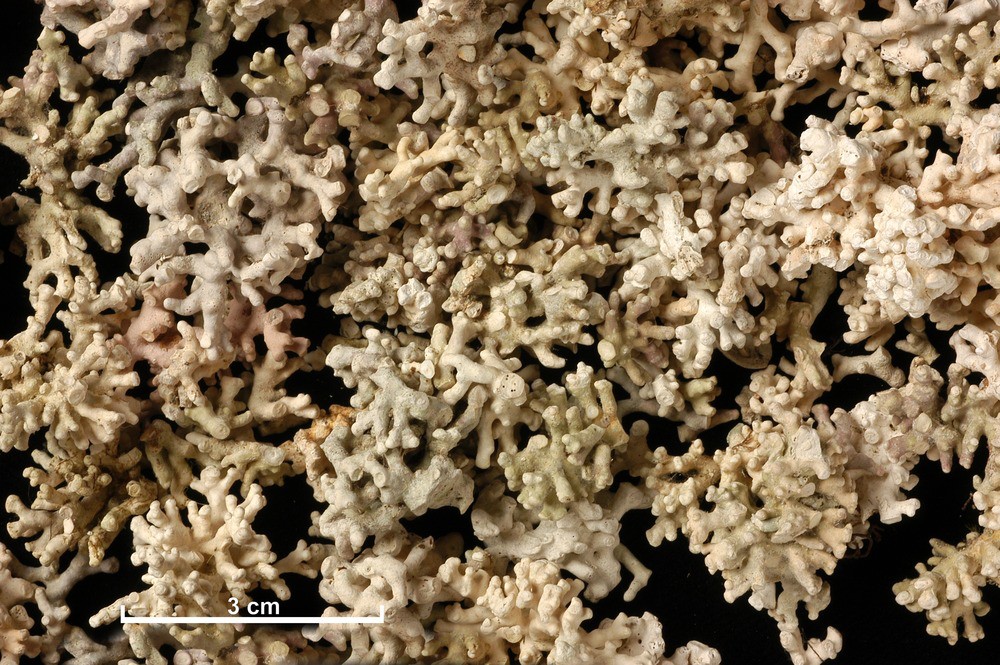
Nullipore or coralline sand from Craig, two miles east of Plockton, near Kyle of Lochalsh. In certain areas the calcareous alga Lithothamnion calcarreum flourishes in great abundance and broken fragments of the thallus form dazzling, creamy-white beaches which are composed almost exclusively of this material.
BGS image ID: P527777
Nullipore or coralline sand from Craig, two miles east of Plockton, near Kyle of Lochalsh. In certain areas the calcareous alga Lithothamnion calcarreum flourishes in great abundance and broken fragments of the thallus form dazzling, creamy-white beaches which are composed almost exclusively of this material.  Lithothamnion calcarreum lives in the upper and lower sub-littoral zone. In places they have been dug for agricultural lime. Colonies have been found elsewhere in Scotland, especially on Skye near Dunvegan, particularly from three bays the largest of which is Camus Ban north of Rubha na Gairbhe.

British Geological Survey Petrology Collection sample number MC 7553.


Nullipore or coralline sand probably from the shore at Claigan, about four miles north of Dunvegan Castle. Coralline or nullipore sand is found in three small bays near Claigan. It consists of broken fragments of the calcareous algae Lithothamnion calcarreum.
BGS image ID: P527775
Nullipore or coralline sand probably from the shore at Claigan, about four miles north of Dunvegan Castle. Coralline or nullipore sand is found in three small bays near Claigan. It consists of broken fragments of the calcareous algae Lithothamnion calcarreum. It forms dazzling white beaches. The sand is coarsely granular and the fragments composing it have a marked coral-like appearance. The quantity varies somewhat from year to year depending on the incidence of storms. Camas Ban, the most southerly of the three bays, is accessible by road. Published figures (from 1956) estimated a minimum of 2,500 tons is available at low tide, possibly less than 1,000 tons at high tide. The other two beaches are inaccessible by road; the minimum quantity available at low tide from the two beaches would probably amount to about 5,000 tons. The sand has been used locally for agricultural purposes. Analysis showed this sand (S.L. 6) to contain 84.32 per cent calcium carbonate and 10.35 per cent magnesium carbonate.

British Geological Survey Petrology Collection sample number MC 7551.

Bob McIntosh

Sunday, 28 April 2013

Splitting a granite block using the plug and feather technique, Rubislaw Quarry, Aberdeen

Splitting a granite block using the plug and feather technique. Tapping home the peg. Rubislaw Quarry, Rubislaw Granite Co. Ltd., Queens Road, Aberdeen.
BGS image ID: P538600
Splitting a granite block using the plug and feather technique. Tapping home the peg. Rubislaw Quarry, Rubislaw Granite Co. Ltd., Queens Road, Aberdeen. Date: c. 1961.

From the Hugh O'Neill Collection.

Bob McIntosh

Saturday, 27 April 2013

Dr. Archie MacGregor and Dr. Cecil F. Powell, 1936 Royal Society Montserrat Expedition

Dr. Archie MacGregor (with pith helmet) from the Geological Survey of Great Britain. Geologist with the 1936 Royal Society Montserrat Expedition. Seismologist, Dr. Cecil F. Powell of Bristol University, Nobel Physics Prize in 1950 for his work on Pi Mesons. Papers in Bristol University Library; Special Collections.
BGS image ID: P536847
Dr. Archie MacGregor (right) (with pith helmet) Geologist from the Geological Survey of Great Britain, and Dr. Cecil F. Powell (left) of Bristol University, Seismologist and winner of Nobel Physics Prize in 1950 for his work on Pi Mesons. 1936 Royal Society Montserrat Expedition.

The Royal Society Expedition was led by Dr A.G. MacGregor, a geologist, and Dr C.F. Powell, a physicist. In May 1936 Dr T.A. Jagger of the Hawaii Volcano Observatory visited Montserrat at the invitation of the Royal Society, and arriving with him, on the same steamer, was Mr F.A. Perret the distinguished volcanologist from the Mt Pelée Volcano Museum.

Powell carried out seismological investigations between 24th March and 24th July using four horizontal Jagger shock recorders, one Kew-Jagger vertical shock recorder and one two-component horizontal Wiechert seismograph. MacGregor studied the geology and petrology of Montserrat during 11 weeks of field work carried out between March and May 1936. Both men published preliminary and detailed accounts of their respective studies.
The Archibald Gordon MacGregor Archive

Bob McIntosh

Friday, 26 April 2013

Portrait of James Flanagan

BGS picture ID: P680252

This portrait of James Flanagan (d. 1859), a fossil collector for the Geological Survey of Ireland, was drawn in 1856 by George Victor Du Noyer (1817-1869) a geologist, antiquary and artist.
The portrait was sketched in commeration of the visit of the Director of the Geological Survey, Sir Roderick Murchison and was done at Ferriters Cove, County Kerry.

Flanagan and Du Noyer had originally met in 1835 when both were working for the Ordnance Survey in Ireland.

Andrew L Morrison

Fossil wood from Tasmania collected by Sir Joseph D. Hooker in 1840


Tampin fossil tree; Microscope slide from the Sir Joseph D. Hooker Collection, BGS.  This slide is of piece of fossil wood from Tasmania collected by Hooker in 1840. The Expedition leader, James Clark Ross recorded that the fossil trees were found encased in ancient lava flows and were preserved as 'most beautiful agate'. Age: Tertiary Period, 40 million years old.
BGS image ID: P776111
Tamrin fossil tree; Microscope slide from the Sir Joseph D. Hooker Collection, BGS.

This slide is of piece of fossil wood from Tasmania collected by Hooker in 1840. The Expedition leader, James Clark Ross recorded that the fossil trees were found encased in ancient lava flows and were preserved as 'most beautiful agate'. Age: Tertiary Period, 40 million years old.

From Collection A: Joseph Dalton Hooker collection. Hooker's collection comprises material collected during his 1839-1843 circum-Antarctic voyage in HMS Erebus and HMS Terror. 

Bob McIntosh

Thursday, 25 April 2013

Whitby Harbour, by W.J. Harrison, 1897.

Whitby Harbour, by W.J. Harrison, 1897.
BGS image ID: P243580
Whitby Harbour, by W.J. Harrison, 1897.

The image is from the British Association for the Advancement of Science photograph collection. This collection of over 7,000 photographs is held in the British Geological Survey Archive.

The BAAS collection has had an interesting history. In 1888, O.J. Jeffs proposed to the BAAS that they should address the need for systematic photographic coverage of the geology of the United Kingdom. His proposal was accepted and the BAAS set up a committee under the chairmanship of James Geikie, for the ‘collection, preservation and systematic registration of photographs of geological interest in the United Kingdom’. This was how the collection began.

The collection was first housed in the Geological Survey Museum and Library in Jermyn Street, London and then moved to the new new premises in Exhibition Road. During the Second World War the glass plates were moved 'for safety' to Bristol where unfortunately they were totally destroyed during an air raid, the prints still housed in Exhibition Road remained undamaged.

Bob McIntosh

Wednesday, 24 April 2013

Cut and trimmed muscovite mica from the Loch Nevis Mica Prospect, Knoydart, Invernessshire


Muscovite mica from the Loch Nevis Mica Prospect, Knoydart, Invernessshire.  Specimens of graded mica classed as 'Graded No 5 1/2 good stained'. The specimens of muscovite mica would have been worked at the Pitlochry Sorting Factory during the Second World War.
BGS image ID: P527602
Muscovite mica from the Loch Nevis Mica Prospect, Knoydart, Invernessshire.

Specimens of graded mica classed as 'Graded No 5 1/2 good stained'. The specimens of muscovite mica would have been worked at the Pitlochry Sorting Factory during the Second World War. 

After the mica 'books' were extracted from the quarry the first process they underwent was rough dressing. This was initially done near the quarry at Knoydart but soon transferred to the Pitlochry Sorting Factory. It consisted of splitting the books into sheets and the removal by cutting of the flaws, incrustations and striations. The mica would then be passed to the cutters who, using skill and great care would remove the remaining flaws and trim the edges leaving block mica of irregular shape with a curved and indented outline. Further fine splitting to remove stains and spots required great judgement to balance loss in weight with the possibility of improving the quality of the block. The final process was the grading for size and quality. Size was defined by the area of the largest rectangle that could be cut from it, while quality was based on clearness, hardness and flatness. Typical remaining imperfections such as air spots, mineral or vegetable spots or lines, softness or waviness would affect the electrical and/or mechanical properties of the mica. Finally, mica to the weight of around 50 lbs. would be placed into wooden packing cases before despatch to London.

Mica, during wartime, became a mineral of high strategic value, an essential war material which due to its unique physical properties rendered it indispensable as an insulating medium in the manufacture of many types of electrical, radio and telephone equipment.

British Geological Survey Petrology Collection sample number MC 7382.

Bob McIntosh

Tuesday, 23 April 2013

George Barrow (1853-1932). Geologist with the Geological Survey of Great Britain.

George Barrow (1853-1932). Geologist with the Geological Survey of Great Britain.
BGS image ID: P575833
George Barrow (1853-1932). Geologist with the Geological Survey of Great Britain. 

Worked at igneous and structural problems in the Eastern Highlands. He was the first to recognize and map zones of progressive metamorphism in the Dalradian of North-East Scotland, the 'Barrovian Zones'. Each zone was identified by the appearance of a set of distinctive index minerals. His work led to the present concept of metamorphic grade. 

Later in his career he became the District Geologist for London with a particular interest in water-supply and in the construction and maintenance of railways.

Another picture when he was in Scotland: The Bandits Lair.

Bob McIntosh